Camerafarm product archive #39795
| Image |
Date |
Product description |
Price |
Buy |
|
15/12
|
Rodenstock Skylight 1A-MC Filter - 77mm Rodenstock Skylight 1A-MC Filter - 77mm
These filters have a pale pink tint and act like a UV absorbing filter to cut out ultraviolet radiation. In addition, they eliminate the false colors in shadow due to indirect light from the blue sky and the green landscape. This blue green color distortion is particularly unpleasant on skin. A skylight filter should only be used if the entire motif is in the shade. For the areas lit by direct sunlight will also be subject to the pink filter even though they do not have any blue-green color distortion – they then turn pink. For this reason, a skylight filter should never be used for front-lens protection (use an almost neutral UV blocking filter instead).
Although a skylight filter can substantially enhance the color quality on slide film, it does not provide any advantages for color negative film or digital or video cameras. This is because its effect is very subdued and easily replaced without any visible difference by filtering during printing or by an electronic white balance if the UV radiation is not too high (and then a UV filter would be better).
|


|
|
|
15/12
|
Rodenstock Skylight 1A-MC Filter - 72mm Rodenstock Skylight 1A-MC Filter - 72mm
These filters have a pale pink tint and act like a UV absorbing filter to cut out ultraviolet radiation. In addition, they eliminate the false colors in shadow due to indirect light from the blue sky and the green landscape. This blue green color distortion is particularly unpleasant on skin. A skylight filter should only be used if the entire motif is in the shade. For the areas lit by direct sunlight will also be subject to the pink filter even though they do not have any blue-green color distortion – they then turn pink. For this reason, a skylight filter should never be used for front-lens protection (use an almost neutral UV blocking filter instead).
Although a skylight filter can substantially enhance the color quality on slide film, it does not provide any advantages for color negative film or digital or video cameras. This is because its effect is very subdued and easily replaced without any visible difference by filtering during printing or by an electronic white balance if the UV radiation is not too high (and then a UV filter would be better).
|
|
|
|
15/12
|
Rodenstock Skylight 1A-MC Filter - 67mm Rodenstock Skylight 1A-MC Filter - 67mm
These filters have a pale pink tint and act like a UV absorbing filter to cut out ultraviolet radiation. In addition, they eliminate the false colors in shadow due to indirect light from the blue sky and the green landscape. This blue green color distortion is particularly unpleasant on skin. A skylight filter should only be used if the entire motif is in the shade. For the areas lit by direct sunlight will also be subject to the pink filter even though they do not have any blue-green color distortion – they then turn pink. For this reason, a skylight filter should never be used for front-lens protection (use an almost neutral UV blocking filter instead).
Although a skylight filter can substantially enhance the color quality on slide film, it does not provide any advantages for color negative film or digital or video cameras. This is because its effect is very subdued and easily replaced without any visible difference by filtering during printing or by an electronic white balance if the UV radiation is not too high (and then a UV filter would be better).
|
|
|
|
15/12
|
Rodenstock Skylight 1A-MC Filter - 62mm Rodenstock Skylight 1A-MC Filter - 62mm
These filters have a pale pink tint and act like a UV absorbing filter to cut out ultraviolet radiation. In addition, they eliminate the false colors in shadow due to indirect light from the blue sky and the green landscape. This blue green color distortion is particularly unpleasant on skin. A skylight filter should only be used if the entire motif is in the shade. For the areas lit by direct sunlight will also be subject to the pink filter even though they do not have any blue-green color distortion – they then turn pink. For this reason, a skylight filter should never be used for front-lens protection (use an almost neutral UV blocking filter instead).
Although a skylight filter can substantially enhance the color quality on slide film, it does not provide any advantages for color negative film or digital or video cameras. This is because its effect is very subdued and easily replaced without any visible difference by filtering during printing or by an electronic white balance if the UV radiation is not too high (and then a UV filter would be better).
|
|
|
|
15/12
|
Rodenstock Skylight 1A-MC Filter - 60mm Rodenstock Skylight 1A-MC Filter - 60mm
These filters have a pale pink tint and act like a UV absorbing filter to cut out ultraviolet radiation. In addition, they eliminate the false colors in shadow due to indirect light from the blue sky and the green landscape. This blue green color distortion is particularly unpleasant on skin. A skylight filter should only be used if the entire motif is in the shade. For the areas lit by direct sunlight will also be subject to the pink filter even though they do not have any blue-green color distortion – they then turn pink. For this reason, a skylight filter should never be used for front-lens protection (use an almost neutral UV blocking filter instead).
Although a skylight filter can substantially enhance the color quality on slide film, it does not provide any advantages for color negative film or digital or video cameras. This is because its effect is very subdued and easily replaced without any visible difference by filtering during printing or by an electronic white balance if the UV radiation is not too high (and then a UV filter would be better).
|
|
|
|
15/12
|
Rodenstock Skylight 1A-MC Filter - 58mm Rodenstock Skylight 1A-MC Filter - 58mm
These filters have a pale pink tint and act like a UV absorbing filter to cut out ultraviolet radiation. In addition, they eliminate the false colors in shadow due to indirect light from the blue sky and the green landscape. This blue green color distortion is particularly unpleasant on skin. A skylight filter should only be used if the entire motif is in the shade. For the areas lit by direct sunlight will also be subject to the pink filter even though they do not have any blue-green color distortion – they then turn pink. For this reason, a skylight filter should never be used for front-lens protection (use an almost neutral UV blocking filter instead).
Although a skylight filter can substantially enhance the color quality on slide film, it does not provide any advantages for color negative film or digital or video cameras. This is because its effect is very subdued and easily replaced without any visible difference by filtering during printing or by an electronic white balance if the UV radiation is not too high (and then a UV filter would be better).
|
|
|
|
15/12
|
Rodenstock Skylight 1A-MC Filter - 55mm Rodenstock Skylight 1A-MC Filter - 55mm
These filters have a pale pink tint and act like a UV absorbing filter to cut out ultraviolet radiation. In addition, they eliminate the false colors in shadow due to indirect light from the blue sky and the green landscape. This blue green color distortion is particularly unpleasant on skin. A skylight filter should only be used if the entire motif is in the shade. For the areas lit by direct sunlight will also be subject to the pink filter even though they do not have any blue-green color distortion – they then turn pink. For this reason, a skylight filter should never be used for front-lens protection (use an almost neutral UV blocking filter instead).
Although a skylight filter can substantially enhance the color quality on slide film, it does not provide any advantages for color negative film or digital or video cameras. This is because its effect is very subdued and easily replaced without any visible difference by filtering during printing or by an electronic white balance if the UV radiation is not too high (and then a UV filter would be better).
|
|
|
|
15/12
|
Rodenstock Skylight 1A-MC Filter - 52mm Rodenstock Skylight 1A-MC Filter - 52mm
These filters have a pale pink tint and act like a UV absorbing filter to cut out ultraviolet radiation. In addition, they eliminate the false colors in shadow due to indirect light from the blue sky and the green landscape. This blue green color distortion is particularly unpleasant on skin. A skylight filter should only be used if the entire motif is in the shade. For the areas lit by direct sunlight will also be subject to the pink filter even though they do not have any blue-green color distortion – they then turn pink. For this reason, a skylight filter should never be used for front-lens protection (use an almost neutral UV blocking filter instead).
Although a skylight filter can substantially enhance the color quality on slide film, it does not provide any advantages for color negative film or digital or video cameras. This is because its effect is very subdued and easily replaced without any visible difference by filtering during printing or by an electronic white balance if the UV radiation is not too high (and then a UV filter would be better).
|
|
|
|
15/12
|
Rodenstock Skylight 1A-MC Filter - 49mm Rodenstock Skylight 1A-MC Filter - 49mm
These filters have a pale pink tint and act like a UV absorbing filter to cut out ultraviolet radiation. In addition, they eliminate the false colors in shadow due to indirect light from the blue sky and the green landscape. This blue green color distortion is particularly unpleasant on skin. A skylight filter should only be used if the entire motif is in the shade. For the areas lit by direct sunlight will also be subject to the pink filter even though they do not have any blue-green color distortion – they then turn pink. For this reason, a skylight filter should never be used for front-lens protection (use an almost neutral UV blocking filter instead).
Although a skylight filter can substantially enhance the color quality on slide film, it does not provide any advantages for color negative film or digital or video cameras. This is because its effect is very subdued and easily replaced without any visible difference by filtering during printing or by an electronic white balance if the UV radiation is not too high (and then a UV filter would be better).
|
|
|
|
15/12
|
Rodenstock Skylight 1A-MC Filter - 46mm Rodenstock Skylight 1A-MC Filter - 46mm
These filters have a pale pink tint and act like a UV absorbing filter to cut out ultraviolet radiation. In addition, they eliminate the false colors in shadow due to indirect light from the blue sky and the green landscape. This blue green color distortion is particularly unpleasant on skin. A skylight filter should only be used if the entire motif is in the shade. For the areas lit by direct sunlight will also be subject to the pink filter even though they do not have any blue-green color distortion – they then turn pink. For this reason, a skylight filter should never be used for front-lens protection (use an almost neutral UV blocking filter instead).
Although a skylight filter can substantially enhance the color quality on slide film, it does not provide any advantages for color negative film or digital or video cameras. This is because its effect is very subdued and easily replaced without any visible difference by filtering during printing or by an electronic white balance if the UV radiation is not too high (and then a UV filter would be better).
|
|
|
|
15/12
|
Rodenstock Skylight 1A-MC Filter - 43mm Rodenstock Skylight 1A-MC Filter - 43mm
These filters have a pale pink tint and act like a UV absorbing filter to cut out ultraviolet radiation. In addition, they eliminate the false colors in shadow due to indirect light from the blue sky and the green landscape. This blue green color distortion is particularly unpleasant on skin. A skylight filter should only be used if the entire motif is in the shade. For the areas lit by direct sunlight will also be subject to the pink filter even though they do not have any blue-green color distortion – they then turn pink. For this reason, a skylight filter should never be used for front-lens protection (use an almost neutral UV blocking filter instead).
Although a skylight filter can substantially enhance the color quality on slide film, it does not provide any advantages for color negative film or digital or video cameras. This is because its effect is very subdued and easily replaced without any visible difference by filtering during printing or by an electronic white balance if the UV radiation is not too high (and then a UV filter would be better).
|
|
|
|
15/12
|
Rodenstock Skylight 1A-MC Filter - 40mm Rodenstock Skylight 1A-MC Filter - 40mm
These filters have a pale pink tint and act like a UV absorbing filter to cut out ultraviolet radiation. In addition, they eliminate the false colors in shadow due to indirect light from the blue sky and the green landscape. This blue green color distortion is particularly unpleasant on skin. A skylight filter should only be used if the entire motif is in the shade. For the areas lit by direct sunlight will also be subject to the pink filter even though they do not have any blue-green color distortion – they then turn pink. For this reason, a skylight filter should never be used for front-lens protection (use an almost neutral UV blocking filter instead).
Although a skylight filter can substantially enhance the color quality on slide film, it does not provide any advantages for color negative film or digital or video cameras. This is because its effect is very subdued and easily replaced without any visible difference by filtering during printing or by an electronic white balance if the UV radiation is not too high (and then a UV filter would be better).
|
|
|
|
15/12
|
Rodenstock Skylight 1A-MC Filter - 39mm Rodenstock Skylight 1A-MC Filter - 39mm
These filters have a pale pink tint and act like a UV absorbing filter to cut out ultraviolet radiation. In addition, they eliminate the false colors in shadow due to indirect light from the blue sky and the green landscape. This blue green color distortion is particularly unpleasant on skin. A skylight filter should only be used if the entire motif is in the shade. For the areas lit by direct sunlight will also be subject to the pink filter even though they do not have any blue-green color distortion – they then turn pink. For this reason, a skylight filter should never be used for front-lens protection (use an almost neutral UV blocking filter instead).
Although a skylight filter can substantially enhance the color quality on slide film, it does not provide any advantages for color negative film or digital or video cameras. This is because its effect is very subdued and easily replaced without any visible difference by filtering during printing or by an electronic white balance if the UV radiation is not too high (and then a UV filter would be better).
|
|
|
|
15/12
|
Rodenstock Skylight 1A-MC Filter - 37mm Rodenstock Skylight 1A-MC Filter - 37mm
These filters have a pale pink tint and act like a UV absorbing filter to cut out ultraviolet radiation. In addition, they eliminate the false colors in shadow due to indirect light from the blue sky and the green landscape. This blue green color distortion is particularly unpleasant on skin. A skylight filter should only be used if the entire motif is in the shade. For the areas lit by direct sunlight will also be subject to the pink filter even though they do not have any blue-green color distortion – they then turn pink. For this reason, a skylight filter should never be used for front-lens protection (use an almost neutral UV blocking filter instead).
Although a skylight filter can substantially enhance the color quality on slide film, it does not provide any advantages for color negative film or digital or video cameras. This is because its effect is very subdued and easily replaced without any visible difference by filtering during printing or by an electronic white balance if the UV radiation is not too high (and then a UV filter would be better).
|
|
|
|
15/12
|
Rodenstock Skylight 1A-MC Filter - 30mm Rodenstock Skylight 1A-MC Filter - 30mm
These filters have a pale pink tint and act like a UV absorbing filter to cut out ultraviolet radiation. In addition, they eliminate the false colors in shadow due to indirect light from the blue sky and the green landscape. This blue green color distortion is particularly unpleasant on skin. A skylight filter should only be used if the entire motif is in the shade. For the areas lit by direct sunlight will also be subject to the pink filter even though they do not have any blue-green color distortion – they then turn pink. For this reason, a skylight filter should never be used for front-lens protection (use an almost neutral UV blocking filter instead).
Although a skylight filter can substantially enhance the color quality on slide film, it does not provide any advantages for color negative film or digital or video cameras. This is because its effect is very subdued and easily replaced without any visible difference by filtering during printing or by an electronic white balance if the UV radiation is not too high (and then a UV filter would be better).
|
|
|
|
15/12
|
Rodenstock Skylight 1A-MC Filter - 105mm Rodenstock Skylight 1A-MC Filter - 105mm
These filters have a pale pink tint and act like a UV absorbing filter to cut out ultraviolet radiation. In addition, they eliminate the false colors in shadow due to indirect light from the blue sky and the green landscape. This blue green color distortion is particularly unpleasant on skin. A skylight filter should only be used if the entire motif is in the shade. For the areas lit by direct sunlight will also be subject to the pink filter even though they do not have any blue-green color distortion – they then turn pink. For this reason, a skylight filter should never be used for front-lens protection (use an almost neutral UV blocking filter instead).
Although a skylight filter can substantially enhance the color quality on slide film, it does not provide any advantages for color negative film or digital or video cameras. This is because its effect is very subdued and easily replaced without any visible difference by filtering during printing or by an electronic white balance if the UV radiation is not too high (and then a UV filter would be better).
|
|
|
|
15/12
|
Rodenstock UV-MC Filter - 95mm Rodenstock UV-MC Filter - 95mm
Stringent quality precision machined crafted metal rings to ensure optical flatness.
Professional filters for all imaging applications.
Designed for use with high performance optics.
Meets RoHS standards for environmental concerns.
A high quality optical glass.
A unique quality scratch resistant lotus leaf hardcoat to prevent abrasions and the effects of moisture, while providing a professional standard of light transmission necessary for high resolution imaging.
Meets Rodenstock / Linos Optical standards for HR Digital.
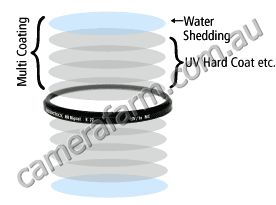
Multi Coating Layers:
Multi layers for UV, scratch proof, water shedding and other optical features.
|
|
|
|
15/12
|
Rodenstock UV-MC Filter - 86mm Rodenstock UV-MC Filter - 86mm
Stringent quality precision machined crafted metal rings to ensure optical flatness.
Professional filters for all imaging applications.
Designed for use with high performance optics.
Meets RoHS standards for environmental concerns.
A high quality optical glass.
A unique quality scratch resistant lotus leaf hardcoat to prevent abrasions and the effects of moisture, while providing a professional standard of light transmission necessary for high resolution imaging.
Meets Rodenstock / Linos Optical standards for HR Digital.
Multi Coating Layers:
Multi layers for UV, scratch proof, water shedding and other optical features.
|
|
|
|
15/12
|
Rodenstock UV-MC Filter - 82mm Rodenstock UV-MC Filter - 82mm
Stringent quality precision machined crafted metal rings to ensure optical flatness.
Professional filters for all imaging applications.
Designed for use with high performance optics.
Meets RoHS standards for environmental concerns.
A high quality optical glass.
A unique quality scratch resistant lotus leaf hardcoat to prevent abrasions and the effects of moisture, while providing a professional standard of light transmission necessary for high resolution imaging.
Meets Rodenstock / Linos Optical standards for HR Digital.
Multi Coating Layers:
Multi layers for UV, scratch proof, water shedding and other optical features.
|
|
|
|
15/12
|
Rodenstock UV-MC Filter - 77mm Rodenstock UV-MC Filter - 77mm
Stringent quality precision machined crafted metal rings to ensure optical flatness.
Professional filters for all imaging applications.
Designed for use with high performance optics.
Meets RoHS standards for environmental concerns.
A high quality optical glass.
A unique quality scratch resistant lotus leaf hardcoat to prevent abrasions and the effects of moisture, while providing a professional standard of light transmission necessary for high resolution imaging.
Meets Rodenstock / Linos Optical standards for HR Digital.
Multi Coating Layers:
Multi layers for UV, scratch proof, water shedding and other optical features.
|
|
|
|
15/12
|
Rodenstock UV-MC Filter - 72mm Rodenstock UV-MC Filter - 72mm
Stringent quality precision machined crafted metal rings to ensure optical flatness.
Professional filters for all imaging applications.
Designed for use with high performance optics.
Meets RoHS standards for environmental concerns.
A high quality optical glass.
A unique quality scratch resistant lotus leaf hardcoat to prevent abrasions and the effects of moisture, while providing a professional standard of light transmission necessary for high resolution imaging.
Meets Rodenstock / Linos Optical standards for HR Digital.
Multi Coating Layers:
Multi layers for UV, scratch proof, water shedding and other optical features.
|
|
|
|
15/12
|
Rodenstock UV-MC Filter - 67mm Rodenstock UV-MC Filter - 67mm
Stringent quality precision machined crafted metal rings to ensure optical flatness.
Professional filters for all imaging applications.
Designed for use with high performance optics.
Meets RoHS standards for environmental concerns.
A high quality optical glass.
A unique quality scratch resistant lotus leaf hardcoat to prevent abrasions and the effects of moisture, while providing a professional standard of light transmission necessary for high resolution imaging.
Meets Rodenstock / Linos Optical standards for HR Digital.
Multi Coating Layers:
Multi layers for UV, scratch proof, water shedding and other optical features.
|
|
|
|
15/12
|
Rodenstock UV-MC Filter - 62mm Rodenstock UV-MC Filter - 62mm
Stringent quality precision machined crafted metal rings to ensure optical flatness.
Professional filters for all imaging applications.
Designed for use with high performance optics.
Meets RoHS standards for environmental concerns.
A high quality optical glass.
A unique quality scratch resistant lotus leaf hardcoat to prevent abrasions and the effects of moisture, while providing a professional standard of light transmission necessary for high resolution imaging.
Meets Rodenstock / Linos Optical standards for HR Digital.
Multi Coating Layers:
Multi layers for UV, scratch proof, water shedding and other optical features.
|
|
|
|
15/12
|
Rodenstock UV-MC Filter - 60mm Rodenstock UV-MC Filter - 60mm
Stringent quality precision machined crafted metal rings to ensure optical flatness.
Professional filters for all imaging applications.
Designed for use with high performance optics.
Meets RoHS standards for environmental concerns.
A high quality optical glass.
A unique quality scratch resistant lotus leaf hardcoat to prevent abrasions and the effects of moisture, while providing a professional standard of light transmission necessary for high resolution imaging.
Meets Rodenstock / Linos Optical standards for HR Digital.
Multi Coating Layers:
Multi layers for UV, scratch proof, water shedding and other optical features.
|
|
|
|
15/12
|
Rodenstock UV-MC Filter - 58mm Rodenstock UV-MC Filter - 58mm
Stringent quality precision machined crafted metal rings to ensure optical flatness.
Professional filters for all imaging applications.
Designed for use with high performance optics.
Meets RoHS standards for environmental concerns.
A high quality optical glass.
A unique quality scratch resistant lotus leaf hardcoat to prevent abrasions and the effects of moisture, while providing a professional standard of light transmission necessary for high resolution imaging.
Meets Rodenstock / Linos Optical standards for HR Digital.
Multi Coating Layers:
Multi layers for UV, scratch proof, water shedding and other optical features.
|
|
|
|
15/12
|
Rodenstock UV-MC Filter - 55mm Rodenstock UV-MC Filter - 55mm
Stringent quality precision machined crafted metal rings to ensure optical flatness.
Professional filters for all imaging applications.
Designed for use with high performance optics.
Meets RoHS standards for environmental concerns.
A high quality optical glass.
A unique quality scratch resistant lotus leaf hardcoat to prevent abrasions and the effects of moisture, while providing a professional standard of light transmission necessary for high resolution imaging.
Meets Rodenstock / Linos Optical standards for HR Digital.
Multi Coating Layers:
Multi layers for UV, scratch proof, water shedding and other optical features.
|
|
|
|
15/12
|
Rodenstock UV-MC Filter - 52mm Rodenstock UV-MC Filter - 52mm
Stringent quality precision machined crafted metal rings to ensure optical flatness.
Professional filters for all imaging applications.
Designed for use with high performance optics.
Meets RoHS standards for environmental concerns.
A high quality optical glass.
A unique quality scratch resistant lotus leaf hardcoat to prevent abrasions and the effects of moisture, while providing a professional standard of light transmission necessary for high resolution imaging.
Meets Rodenstock / Linos Optical standards for HR Digital.
Multi Coating Layers:
Multi layers for UV, scratch proof, water shedding and other optical features.
|
|
|
|
15/12
|
Rodenstock UV-MC Filter - 49mm Rodenstock UV-MC Filter - 49mm
Stringent quality precision machined crafted metal rings to ensure optical flatness.
Professional filters for all imaging applications.
Designed for use with high performance optics.
Meets RoHS standards for environmental concerns.
A high quality optical glass.
A unique quality scratch resistant lotus leaf hardcoat to prevent abrasions and the effects of moisture, while providing a professional standard of light transmission necessary for high resolution imaging.
Meets Rodenstock / Linos Optical standards for HR Digital.
Multi Coating Layers:
Multi layers for UV, scratch proof, water shedding and other optical features.
|
|
|
|
15/12
|
Rodenstock UV-MC Filter - 46mm Rodenstock UV-MC Filter - 46mm
Stringent quality precision machined crafted metal rings to ensure optical flatness.
Professional filters for all imaging applications.
Designed for use with high performance optics.
Meets RoHS standards for environmental concerns.
A high quality optical glass.
A unique quality scratch resistant lotus leaf hardcoat to prevent abrasions and the effects of moisture, while providing a professional standard of light transmission necessary for high resolution imaging.
Meets Rodenstock / Linos Optical standards for HR Digital.
Multi Coating Layers:
Multi layers for UV, scratch proof, water shedding and other optical features.
|
|
|
|
15/12
|
Rodenstock UV-MC Filter - 43mm Rodenstock UV-MC Filter - 43mm
Stringent quality precision machined crafted metal rings to ensure optical flatness.
Professional filters for all imaging applications.
Designed for use with high performance optics.
Meets RoHS standards for environmental concerns.
A high quality optical glass.
A unique quality scratch resistant lotus leaf hardcoat to prevent abrasions and the effects of moisture, while providing a professional standard of light transmission necessary for high resolution imaging.
Meets Rodenstock / Linos Optical standards for HR Digital.
Multi Coating Layers:
Multi layers for UV, scratch proof, water shedding and other optical features.
|
|
|
|
15/12
|
Rodenstock UV-MC Filter - 40mm Rodenstock UV-MC Filter - 40mm
Stringent quality precision machined crafted metal rings to ensure optical flatness.
Professional filters for all imaging applications.
Designed for use with high performance optics.
Meets RoHS standards for environmental concerns.
A high quality optical glass.
A unique quality scratch resistant lotus leaf hardcoat to prevent abrasions and the effects of moisture, while providing a professional standard of light transmission necessary for high resolution imaging.
Meets Rodenstock / Linos Optical standards for HR Digital.
Multi Coating Layers:
Multi layers for UV, scratch proof, water shedding and other optical features.
|
|
|
|
15/12
|
Rodenstock UV-MC Filter - 39mm Rodenstock UV-MC Filter - 39mm
Stringent quality precision machined crafted metal rings to ensure optical flatness.
Professional filters for all imaging applications.
Designed for use with high performance optics.
Meets RoHS standards for environmental concerns.
A high quality optical glass.
A unique quality scratch resistant lotus leaf hardcoat to prevent abrasions and the effects of moisture, while providing a professional standard of light transmission necessary for high resolution imaging.
Meets Rodenstock / Linos Optical standards for HR Digital.
Multi Coating Layers:
Multi layers for UV, scratch proof, water shedding and other optical features.
|
|
|
|
15/12
|
Rodenstock UV-MC Filter - 37mm Rodenstock UV-MC Filter - 37mm
Stringent quality precision machined crafted metal rings to ensure optical flatness.
Professional filters for all imaging applications.
Designed for use with high performance optics.
Meets RoHS standards for environmental concerns.
A high quality optical glass.
A unique quality scratch resistant lotus leaf hardcoat to prevent abrasions and the effects of moisture, while providing a professional standard of light transmission necessary for high resolution imaging.
Meets Rodenstock / Linos Optical standards for HR Digital.
Multi Coating Layers:
Multi layers for UV, scratch proof, water shedding and other optical features.
|
|
|
|
15/12
|
Rodenstock UV-MC Filter - 30mm Rodenstock UV-MC Filter - 30mm
Stringent quality precision machined crafted metal rings to ensure optical flatness.
Professional filters for all imaging applications.
Designed for use with high performance optics.
Meets RoHS standards for environmental concerns.
A high quality optical glass.
A unique quality scratch resistant lotus leaf hardcoat to prevent abrasions and the effects of moisture, while providing a professional standard of light transmission necessary for high resolution imaging.
Meets Rodenstock / Linos Optical standards for HR Digital.
Multi Coating Layers:
Multi layers for UV, scratch proof, water shedding and other optical features.
|
|
|
|
15/12
|
Rodenstock UV-MC Filter - 105mm Rodenstock UV-MC Filter - 105mm
Stringent quality precision machined crafted metal rings to ensure optical flatness.
Professional filters for all imaging applications.
Designed for use with high performance optics.
Meets RoHS standards for environmental concerns.
A high quality optical glass.
A unique quality scratch resistant lotus leaf hardcoat to prevent abrasions and the effects of moisture, while providing a professional standard of light transmission necessary for high resolution imaging.
Meets Rodenstock / Linos Optical standards for HR Digital.
Multi Coating Layers:
Multi layers for UV, scratch proof, water shedding and other optical features.
|
|
|
|
15/12
|
Rodenstock UV-IR Filter - 82mm Rodenstock UV-IR Filter - 82mm
UV blocking filters and UV/IR blocking filters
These glass filters are practically neutral in color effect. They transmit visible light without hindrance while cutting out ultra-violet (UV) radiation. UV/IR filters block infrared radiation, too. Due to the short wavelength, UV is highly scattered and has a high intensity in hazy conditions as diffuse radiation. A color film reacts with a blue-violet veil, while b&w film gives the sky a brighter look, thus reduces the contrast of the clouds against the sky and makes distance views pale.
Whilst under normal conditions, UV absorption of the glass of multi-elements lenses is sufficient to prevent the bluish cast and loss in contrast caused by the weak UV radiation, in the high mountain regions and at the sea, the intensity of the UV radiation may be so strong that UV blocking filters are needed.
With a UV filter in front of the lens, especially warm colors like yellow, orange and red remain pure and distance views become clearer and crisper. Because of the almost imperceptible absorption within the visible wavelength range, you do not need to extend the exposure time or to set a larger aperture.
Thanks to its totally neutral color rendition a UV blocking filter can also be used as a lens protection, e.g. against salt water splashes, wind-borne sand or even finger-prints.
UV/IR blocking filters have been specially designed for digital or video cameras. They filter UV as well as infrared (IR) radiation which, due to the high IR sensitivity of CCDs, can lead to reddish color shift, fogging and blur (because normal camera lenses are not color corrected for the long IR wavelengths).
|
|
|
|
15/12
|
Rodenstock UV-IR Filter - 77mm Rodenstock UV-IR Filter - 77mm
UV blocking filters and UV/IR blocking filters
These glass filters are practically neutral in color effect. They transmit visible light without hindrance while cutting out ultra-violet (UV) radiation. UV/IR filters block infrared radiation, too. Due to the short wavelength, UV is highly scattered and has a high intensity in hazy conditions as diffuse radiation. A color film reacts with a blue-violet veil, while b&w film gives the sky a brighter look, thus reduces the contrast of the clouds against the sky and makes distance views pale.
Whilst under normal conditions, UV absorption of the glass of multi-elements lenses is sufficient to prevent the bluish cast and loss in contrast caused by the weak UV radiation, in the high mountain regions and at the sea, the intensity of the UV radiation may be so strong that UV blocking filters are needed.
With a UV filter in front of the lens, especially warm colors like yellow, orange and red remain pure and distance views become clearer and crisper. Because of the almost imperceptible absorption within the visible wavelength range, you do not need to extend the exposure time or to set a larger aperture.
Thanks to its totally neutral color rendition a UV blocking filter can also be used as a lens protection, e.g. against salt water splashes, wind-borne sand or even finger-prints.
UV/IR blocking filters have been specially designed for digital or video cameras. They filter UV as well as infrared (IR) radiation which, due to the high IR sensitivity of CCDs, can lead to reddish color shift, fogging and blur (because normal camera lenses are not color corrected for the long IR wavelengths).
|
|
|
|
15/12
|
Rodenstock UV-IR Filter - 72mm Rodenstock UV-IR Filter - 72mm
UV blocking filters and UV/IR blocking filters
These glass filters are practically neutral in color effect. They transmit visible light without hindrance while cutting out ultra-violet (UV) radiation. UV/IR filters block infrared radiation, too. Due to the short wavelength, UV is highly scattered and has a high intensity in hazy conditions as diffuse radiation. A color film reacts with a blue-violet veil, while b&w film gives the sky a brighter look, thus reduces the contrast of the clouds against the sky and makes distance views pale.
Whilst under normal conditions, UV absorption of the glass of multi-elements lenses is sufficient to prevent the bluish cast and loss in contrast caused by the weak UV radiation, in the high mountain regions and at the sea, the intensity of the UV radiation may be so strong that UV blocking filters are needed.
With a UV filter in front of the lens, especially warm colors like yellow, orange and red remain pure and distance views become clearer and crisper. Because of the almost imperceptible absorption within the visible wavelength range, you do not need to extend the exposure time or to set a larger aperture.
Thanks to its totally neutral color rendition a UV blocking filter can also be used as a lens protection, e.g. against salt water splashes, wind-borne sand or even finger-prints.
UV/IR blocking filters have been specially designed for digital or video cameras. They filter UV as well as infrared (IR) radiation which, due to the high IR sensitivity of CCDs, can lead to reddish color shift, fogging and blur (because normal camera lenses are not color corrected for the long IR wavelengths).
|
|
|
|
15/12
|
Rodenstock UV-IR Filter - 67mm Rodenstock UV-IR Filter - 67mm
UV blocking filters and UV/IR blocking filters
These glass filters are practically neutral in color effect. They transmit visible light without hindrance while cutting out ultra-violet (UV) radiation. UV/IR filters block infrared radiation, too. Due to the short wavelength, UV is highly scattered and has a high intensity in hazy conditions as diffuse radiation. A color film reacts with a blue-violet veil, while b&w film gives the sky a brighter look, thus reduces the contrast of the clouds against the sky and makes distance views pale.
Whilst under normal conditions, UV absorption of the glass of multi-elements lenses is sufficient to prevent the bluish cast and loss in contrast caused by the weak UV radiation, in the high mountain regions and at the sea, the intensity of the UV radiation may be so strong that UV blocking filters are needed.
With a UV filter in front of the lens, especially warm colors like yellow, orange and red remain pure and distance views become clearer and crisper. Because of the almost imperceptible absorption within the visible wavelength range, you do not need to extend the exposure time or to set a larger aperture.
Thanks to its totally neutral color rendition a UV blocking filter can also be used as a lens protection, e.g. against salt water splashes, wind-borne sand or even finger-prints.
UV/IR blocking filters have been specially designed for digital or video cameras. They filter UV as well as infrared (IR) radiation which, due to the high IR sensitivity of CCDs, can lead to reddish color shift, fogging and blur (because normal camera lenses are not color corrected for the long IR wavelengths).
|
|
|
|
15/12
|
Rodenstock UV-IR Filter - 62mm Rodenstock UV-IR Filter - 62mm
UV blocking filters and UV/IR blocking filters
These glass filters are practically neutral in color effect. They transmit visible light without hindrance while cutting out ultra-violet (UV) radiation. UV/IR filters block infrared radiation, too. Due to the short wavelength, UV is highly scattered and has a high intensity in hazy conditions as diffuse radiation. A color film reacts with a blue-violet veil, while b&w film gives the sky a brighter look, thus reduces the contrast of the clouds against the sky and makes distance views pale.
Whilst under normal conditions, UV absorption of the glass of multi-elements lenses is sufficient to prevent the bluish cast and loss in contrast caused by the weak UV radiation, in the high mountain regions and at the sea, the intensity of the UV radiation may be so strong that UV blocking filters are needed.
With a UV filter in front of the lens, especially warm colors like yellow, orange and red remain pure and distance views become clearer and crisper. Because of the almost imperceptible absorption within the visible wavelength range, you do not need to extend the exposure time or to set a larger aperture.
Thanks to its totally neutral color rendition a UV blocking filter can also be used as a lens protection, e.g. against salt water splashes, wind-borne sand or even finger-prints.
UV/IR blocking filters have been specially designed for digital or video cameras. They filter UV as well as infrared (IR) radiation which, due to the high IR sensitivity of CCDs, can lead to reddish color shift, fogging and blur (because normal camera lenses are not color corrected for the long IR wavelengths).
|
|
|
|
15/12
|
Rodenstock UV-IR Filter - 58mm Rodenstock UV-IR Filter - 58mm
UV blocking filters and UV/IR blocking filters
These glass filters are practically neutral in color effect. They transmit visible light without hindrance while cutting out ultra-violet (UV) radiation. UV/IR filters block infrared radiation, too. Due to the short wavelength, UV is highly scattered and has a high intensity in hazy conditions as diffuse radiation. A color film reacts with a blue-violet veil, while b&w film gives the sky a brighter look, thus reduces the contrast of the clouds against the sky and makes distance views pale.
Whilst under normal conditions, UV absorption of the glass of multi-elements lenses is sufficient to prevent the bluish cast and loss in contrast caused by the weak UV radiation, in the high mountain regions and at the sea, the intensity of the UV radiation may be so strong that UV blocking filters are needed.
With a UV filter in front of the lens, especially warm colors like yellow, orange and red remain pure and distance views become clearer and crisper. Because of the almost imperceptible absorption within the visible wavelength range, you do not need to extend the exposure time or to set a larger aperture.
Thanks to its totally neutral color rendition a UV blocking filter can also be used as a lens protection, e.g. against salt water splashes, wind-borne sand or even finger-prints.
UV/IR blocking filters have been specially designed for digital or video cameras. They filter UV as well as infrared (IR) radiation which, due to the high IR sensitivity of CCDs, can lead to reddish color shift, fogging and blur (because normal camera lenses are not color corrected for the long IR wavelengths).
|
|
|
|
15/12
|
Rodenstock UV-IR Filter - 55mm Rodenstock UV-IR Filter - 55mm
UV blocking filters and UV/IR blocking filters
These glass filters are practically neutral in color effect. They transmit visible light without hindrance while cutting out ultra-violet (UV) radiation. UV/IR filters block infrared radiation, too. Due to the short wavelength, UV is highly scattered and has a high intensity in hazy conditions as diffuse radiation. A color film reacts with a blue-violet veil, while b&w film gives the sky a brighter look, thus reduces the contrast of the clouds against the sky and makes distance views pale.
Whilst under normal conditions, UV absorption of the glass of multi-elements lenses is sufficient to prevent the bluish cast and loss in contrast caused by the weak UV radiation, in the high mountain regions and at the sea, the intensity of the UV radiation may be so strong that UV blocking filters are needed.
With a UV filter in front of the lens, especially warm colors like yellow, orange and red remain pure and distance views become clearer and crisper. Because of the almost imperceptible absorption within the visible wavelength range, you do not need to extend the exposure time or to set a larger aperture.
Thanks to its totally neutral color rendition a UV blocking filter can also be used as a lens protection, e.g. against salt water splashes, wind-borne sand or even finger-prints.
UV/IR blocking filters have been specially designed for digital or video cameras. They filter UV as well as infrared (IR) radiation which, due to the high IR sensitivity of CCDs, can lead to reddish color shift, fogging and blur (because normal camera lenses are not color corrected for the long IR wavelengths).
|
|
|
|
15/12
|
Rodenstock UV-IR Filter - 52mm Rodenstock UV-IR Filter - 52mm
UV blocking filters and UV/IR blocking filters
These glass filters are practically neutral in color effect. They transmit visible light without hindrance while cutting out ultra-violet (UV) radiation. UV/IR filters block infrared radiation, too. Due to the short wavelength, UV is highly scattered and has a high intensity in hazy conditions as diffuse radiation. A color film reacts with a blue-violet veil, while b&w film gives the sky a brighter look, thus reduces the contrast of the clouds against the sky and makes distance views pale.
Whilst under normal conditions, UV absorption of the glass of multi-elements lenses is sufficient to prevent the bluish cast and loss in contrast caused by the weak UV radiation, in the high mountain regions and at the sea, the intensity of the UV radiation may be so strong that UV blocking filters are needed.
With a UV filter in front of the lens, especially warm colors like yellow, orange and red remain pure and distance views become clearer and crisper. Because of the almost imperceptible absorption within the visible wavelength range, you do not need to extend the exposure time or to set a larger aperture.
Thanks to its totally neutral color rendition a UV blocking filter can also be used as a lens protection, e.g. against salt water splashes, wind-borne sand or even finger-prints.
UV/IR blocking filters have been specially designed for digital or video cameras. They filter UV as well as infrared (IR) radiation which, due to the high IR sensitivity of CCDs, can lead to reddish color shift, fogging and blur (because normal camera lenses are not color corrected for the long IR wavelengths).
|
|
|
|
15/12
|
Rodenstock UV-IR Filter - 49mm Rodenstock UV-IR Filter - 49mm
UV blocking filters and UV/IR blocking filters
These glass filters are practically neutral in color effect. They transmit visible light without hindrance while cutting out ultra-violet (UV) radiation. UV/IR filters block infrared radiation, too. Due to the short wavelength, UV is highly scattered and has a high intensity in hazy conditions as diffuse radiation. A color film reacts with a blue-violet veil, while b&w film gives the sky a brighter look, thus reduces the contrast of the clouds against the sky and makes distance views pale.
Whilst under normal conditions, UV absorption of the glass of multi-elements lenses is sufficient to prevent the bluish cast and loss in contrast caused by the weak UV radiation, in the high mountain regions and at the sea, the intensity of the UV radiation may be so strong that UV blocking filters are needed.
With a UV filter in front of the lens, especially warm colors like yellow, orange and red remain pure and distance views become clearer and crisper. Because of the almost imperceptible absorption within the visible wavelength range, you do not need to extend the exposure time or to set a larger aperture.
Thanks to its totally neutral color rendition a UV blocking filter can also be used as a lens protection, e.g. against salt water splashes, wind-borne sand or even finger-prints.
UV/IR blocking filters have been specially designed for digital or video cameras. They filter UV as well as infrared (IR) radiation which, due to the high IR sensitivity of CCDs, can lead to reddish color shift, fogging and blur (because normal camera lenses are not color corrected for the long IR wavelengths).
|
|
|
|
15/12
|
Rodenstock UV-IR Filter - 46mm Rodenstock UV-IR Filter - 46mm
UV blocking filters and UV/IR blocking filters
These glass filters are practically neutral in color effect. They transmit visible light without hindrance while cutting out ultra-violet (UV) radiation. UV/IR filters block infrared radiation, too. Due to the short wavelength, UV is highly scattered and has a high intensity in hazy conditions as diffuse radiation. A color film reacts with a blue-violet veil, while b&w film gives the sky a brighter look, thus reduces the contrast of the clouds against the sky and makes distance views pale.
Whilst under normal conditions, UV absorption of the glass of multi-elements lenses is sufficient to prevent the bluish cast and loss in contrast caused by the weak UV radiation, in the high mountain regions and at the sea, the intensity of the UV radiation may be so strong that UV blocking filters are needed.
With a UV filter in front of the lens, especially warm colors like yellow, orange and red remain pure and distance views become clearer and crisper. Because of the almost imperceptible absorption within the visible wavelength range, you do not need to extend the exposure time or to set a larger aperture.
Thanks to its totally neutral color rendition a UV blocking filter can also be used as a lens protection, e.g. against salt water splashes, wind-borne sand or even finger-prints.
UV/IR blocking filters have been specially designed for digital or video cameras. They filter UV as well as infrared (IR) radiation which, due to the high IR sensitivity of CCDs, can lead to reddish color shift, fogging and blur (because normal camera lenses are not color corrected for the long IR wavelengths).
|
|
|
|
15/12
|
Rodenstock UV-IR Filter - 43mm Rodenstock UV-IR Filter - 43mm
UV blocking filters and UV/IR blocking filters
These glass filters are practically neutral in color effect. They transmit visible light without hindrance while cutting out ultra-violet (UV) radiation. UV/IR filters block infrared radiation, too. Due to the short wavelength, UV is highly scattered and has a high intensity in hazy conditions as diffuse radiation. A color film reacts with a blue-violet veil, while b&w film gives the sky a brighter look, thus reduces the contrast of the clouds against the sky and makes distance views pale.
Whilst under normal conditions, UV absorption of the glass of multi-elements lenses is sufficient to prevent the bluish cast and loss in contrast caused by the weak UV radiation, in the high mountain regions and at the sea, the intensity of the UV radiation may be so strong that UV blocking filters are needed.
With a UV filter in front of the lens, especially warm colors like yellow, orange and red remain pure and distance views become clearer and crisper. Because of the almost imperceptible absorption within the visible wavelength range, you do not need to extend the exposure time or to set a larger aperture.
Thanks to its totally neutral color rendition a UV blocking filter can also be used as a lens protection, e.g. against salt water splashes, wind-borne sand or even finger-prints.
UV/IR blocking filters have been specially designed for digital or video cameras. They filter UV as well as infrared (IR) radiation which, due to the high IR sensitivity of CCDs, can lead to reddish color shift, fogging and blur (because normal camera lenses are not color corrected for the long IR wavelengths).
|
|
|
|
15/12
|
Rodenstock UV-IR Filter - 40mm Rodenstock UV-IR Filter - 40mm
UV blocking filters and UV/IR blocking filters
These glass filters are practically neutral in color effect. They transmit visible light without hindrance while cutting out ultra-violet (UV) radiation. UV/IR filters block infrared radiation, too. Due to the short wavelength, UV is highly scattered and has a high intensity in hazy conditions as diffuse radiation. A color film reacts with a blue-violet veil, while b&w film gives the sky a brighter look, thus reduces the contrast of the clouds against the sky and makes distance views pale.
Whilst under normal conditions, UV absorption of the glass of multi-elements lenses is sufficient to prevent the bluish cast and loss in contrast caused by the weak UV radiation, in the high mountain regions and at the sea, the intensity of the UV radiation may be so strong that UV blocking filters are needed.
With a UV filter in front of the lens, especially warm colors like yellow, orange and red remain pure and distance views become clearer and crisper. Because of the almost imperceptible absorption within the visible wavelength range, you do not need to extend the exposure time or to set a larger aperture.
Thanks to its totally neutral color rendition a UV blocking filter can also be used as a lens protection, e.g. against salt water splashes, wind-borne sand or even finger-prints.
UV/IR blocking filters have been specially designed for digital or video cameras. They filter UV as well as infrared (IR) radiation which, due to the high IR sensitivity of CCDs, can lead to reddish color shift, fogging and blur (because normal camera lenses are not color corrected for the long IR wavelengths).
|
|
|
|
15/12
|
Rodenstock UV-IR Filter - 37mm Rodenstock UV-IR Filter - 37mm
UV blocking filters and UV/IR blocking filters
These glass filters are practically neutral in color effect. They transmit visible light without hindrance while cutting out ultra-violet (UV) radiation. UV/IR filters block infrared radiation, too. Due to the short wavelength, UV is highly scattered and has a high intensity in hazy conditions as diffuse radiation. A color film reacts with a blue-violet veil, while b&w film gives the sky a brighter look, thus reduces the contrast of the clouds against the sky and makes distance views pale.
Whilst under normal conditions, UV absorption of the glass of multi-elements lenses is sufficient to prevent the bluish cast and loss in contrast caused by the weak UV radiation, in the high mountain regions and at the sea, the intensity of the UV radiation may be so strong that UV blocking filters are needed.
With a UV filter in front of the lens, especially warm colors like yellow, orange and red remain pure and distance views become clearer and crisper. Because of the almost imperceptible absorption within the visible wavelength range, you do not need to extend the exposure time or to set a larger aperture.
Thanks to its totally neutral color rendition a UV blocking filter can also be used as a lens protection, e.g. against salt water splashes, wind-borne sand or even finger-prints.
UV/IR blocking filters have been specially designed for digital or video cameras. They filter UV as well as infrared (IR) radiation which, due to the high IR sensitivity of CCDs, can lead to reddish color shift, fogging and blur (because normal camera lenses are not color corrected for the long IR wavelengths).
|
|
|
|
15/12
|
Rodenstock UV-IR Filter - 30mm Rodenstock UV-IR Filter - 30mm
UV blocking filters and UV/IR blocking filters
These glass filters are practically neutral in color effect. They transmit visible light without hindrance while cutting out ultra-violet (UV) radiation. UV/IR filters block infrared radiation, too. Due to the short wavelength, UV is highly scattered and has a high intensity in hazy conditions as diffuse radiation. A color film reacts with a blue-violet veil, while b&w film gives the sky a brighter look, thus reduces the contrast of the clouds against the sky and makes distance views pale.
Whilst under normal conditions, UV absorption of the glass of multi-elements lenses is sufficient to prevent the bluish cast and loss in contrast caused by the weak UV radiation, in the high mountain regions and at the sea, the intensity of the UV radiation may be so strong that UV blocking filters are needed.
With a UV filter in front of the lens, especially warm colors like yellow, orange and red remain pure and distance views become clearer and crisper. Because of the almost imperceptible absorption within the visible wavelength range, you do not need to extend the exposure time or to set a larger aperture.
Thanks to its totally neutral color rendition a UV blocking filter can also be used as a lens protection, e.g. against salt water splashes, wind-borne sand or even finger-prints.
UV/IR blocking filters have been specially designed for digital or video cameras. They filter UV as well as infrared (IR) radiation which, due to the high IR sensitivity of CCDs, can lead to reddish color shift, fogging and blur (because normal camera lenses are not color corrected for the long IR wavelengths).
|
|
|
|
15/12
|
Rodenstock UV-IR Filter - 28mm Rodenstock UV-IR Filter - 28mm
UV blocking filters and UV/IR blocking filters
These glass filters are practically neutral in color effect. They transmit visible light without hindrance while cutting out ultra-violet (UV) radiation. UV/IR filters block infrared radiation, too. Due to the short wavelength, UV is highly scattered and has a high intensity in hazy conditions as diffuse radiation. A color film reacts with a blue-violet veil, while b&w film gives the sky a brighter look, thus reduces the contrast of the clouds against the sky and makes distance views pale.
Whilst under normal conditions, UV absorption of the glass of multi-elements lenses is sufficient to prevent the bluish cast and loss in contrast caused by the weak UV radiation, in the high mountain regions and at the sea, the intensity of the UV radiation may be so strong that UV blocking filters are needed.
With a UV filter in front of the lens, especially warm colors like yellow, orange and red remain pure and distance views become clearer and crisper. Because of the almost imperceptible absorption within the visible wavelength range, you do not need to extend the exposure time or to set a larger aperture.
Thanks to its totally neutral color rendition a UV blocking filter can also be used as a lens protection, e.g. against salt water splashes, wind-borne sand or even finger-prints.
UV/IR blocking filters have been specially designed for digital or video cameras. They filter UV as well as infrared (IR) radiation which, due to the high IR sensitivity of CCDs, can lead to reddish color shift, fogging and blur (because normal camera lenses are not color corrected for the long IR wavelengths).
|
|
|
|
15/12
|
Rodenstock UV-IR Filter - 27mm Rodenstock UV-IR Filter - 27mm
UV blocking filters and UV/IR blocking filters
These glass filters are practically neutral in color effect. They transmit visible light without hindrance while cutting out ultra-violet (UV) radiation. UV/IR filters block infrared radiation, too. Due to the short wavelength, UV is highly scattered and has a high intensity in hazy conditions as diffuse radiation. A color film reacts with a blue-violet veil, while b&w film gives the sky a brighter look, thus reduces the contrast of the clouds against the sky and makes distance views pale.
Whilst under normal conditions, UV absorption of the glass of multi-elements lenses is sufficient to prevent the bluish cast and loss in contrast caused by the weak UV radiation, in the high mountain regions and at the sea, the intensity of the UV radiation may be so strong that UV blocking filters are needed.
With a UV filter in front of the lens, especially warm colors like yellow, orange and red remain pure and distance views become clearer and crisper. Because of the almost imperceptible absorption within the visible wavelength range, you do not need to extend the exposure time or to set a larger aperture.
Thanks to its totally neutral color rendition a UV blocking filter can also be used as a lens protection, e.g. against salt water splashes, wind-borne sand or even finger-prints.
UV/IR blocking filters have been specially designed for digital or video cameras. They filter UV as well as infrared (IR) radiation which, due to the high IR sensitivity of CCDs, can lead to reddish color shift, fogging and blur (because normal camera lenses are not color corrected for the long IR wavelengths).
|
|
|
|
15/12
|
Mitsubishi HC-5500 Home Theatre Projector - Full HD 1080p, 1200 Lumens, 14,000;1, HDMI
HC5500 1080P Home Theatre Projector
The full high-definition HC4900 from Mitsubishi Electric, with it's native 1080P high definition (1920 x 1080) resolution, 1000 ANSI lumens brightness and superb 7500:1 contrast ratio, sets all new standard in quality and affordability.
Features
-
1080P Full high-definition (1920 x 1080) powered by the next-generation LCD technology
-
Equipped with Mitsubishis swift auto-iris control, for contrast up to a massive 14,000:1
-
Reon-VX image processor with HQVTM(Hollywood Quality Video) technology
-
Quietest fan in its class, at 19dB(A) (in low mode)
-
The lamp boasts a 5000-hour service life (in low mode),and can be replaced from the side of the projector - perfect for ceiling mounted installations
-
1.2x powered zoom and focus lens
-
ED (extra-low dispersion) glass lens
-
All-direction motor-drive lens shift for greatly enhanced ease of set-up
-
Two HDMI v1.3terminals
-
Trigger terminal
The HC5500 comes equipped with all the great features you've come to expect from our Home Theatre projectors:
New generation inorganic LCD panel
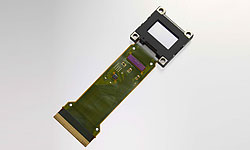 |
Inorganic LCD panel
|
Normally found in higher priced models, the HC5500 features the latestinorganic LCD panel for full high-definition projection. This LCD panel generates high definition images that jump off the screen with vivid colour and rich, smooth blacks, and with approximately 10 times the life of standard organic film panels, our LCD panels are designed to provide outstanding images over the long run, with colours that stay vibrant and high definition images that retain their sharpness.
Full-HD compatible lens
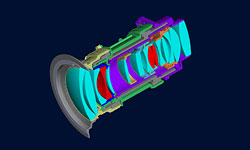 |
ED (extra-low dispersion) glass lenses
|
In order to display full-HD resolution, the HC5500 is equipped with a lens system comprised of 17 elements in 14 groups, including three ED (extra-low dispersion) lenses, which are more costly and deliver higher performance than conventional glass lenses. This lens system dramatically improves chromatic aberration and peripheral focus, giving you a sharp, uniform inmages right to the edge of the screen.
New optical engine greatly increases installation flexibility
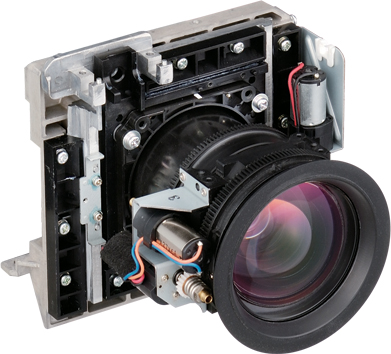 |
New optical engine
|
To allow impressive big-screen images to be enjoyed even in a small room, the HC5000 is equipped with a 1.6x power zoom and focus. The projection distance for a 100-inch (16:9) picture is just 3.1 meters. In addition, there is also a power lens shift for moving the lens vertically and horizontally, greatly increasing installation flexibility.
One of the industry's quietest projectors, just 19 dB
Due to the redesigned cooling system and the use of a low-noise fan, operating noise has been reduced to an amazingly low 19 dB (low mode).
Mitsubishi Electric newly developed auto iris forseamless scene transitions
Often found in higher priced models, the HC5500 features a swift auto-iris control algorithm, which offers high speed transitions between light and dark images, for faithful reproduction of scene sequences in your favourite films or shows. Combined with the HC6000's original contrast control, the auto-iris feature always ensures you get the richest blacks, the brightest whites, and the most vivid colours in between.

|
| Newly developedauto iris |
Silicon Optix Reon VX next-generation full 10-bit video processor
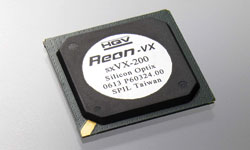 |
| Reon VX |
The HC5500 is equipped with the latest Reon VX chip with HQV (Hollywood Quality Video) technology, produced by the US company Silicon Optix.This chip is widely usedin high-end AV equipment, and has earned an outstanding reputation among industry professionals. Withrapid speed I/P conversion and a high precision video scaler, the Reon-VX processor guarantees excellent reproduction of images from almost any video source.
Equipped with 5000-hour* long-life lamp
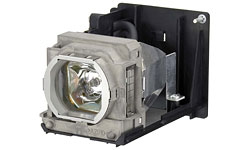 |
| Long-life lamp |
The optimum design for temperature control of the new colour light source lamp, as well as Mitsubishi Electric's unique lighting timing, have extended the useful life of the lamp to a maximum of 5000 hours.
Dust protection for LCD panel 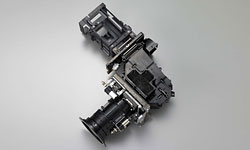
To prevent dust from adhering to the LCD panel, the LCD block is equipped with a dust protection cover.
Side Loading Lamp
Users can replace the lamp with out taking down the projector if ceiling mounted. This design simplifies lamp replacements without turning the projector around or over when mounted on the ceiling or resting on a shelf. This design helps to reduce overall cost of ownership and maintenance.
Dual HDMI v1.3Connectors compatible with Deep Colour
Allows for 10 and 12 bit video in addition to conventional 8-bit for reproduction of full colour gradients and high contrast.
*Maximum of 5000 hours at low mode and 2000 hours at standard mode. Lamp life is defined as the average time until brightness is reduced by half; it is not a guaranteed life for all lamps. Lamp life will vary considerably depending on the usage environment and conditions, and whether regular maintenance such as cleaning is performed.
Specification Overview
|
Model
|
HC5500
|
|
Display technology
|
0.74" 3-LCD
|
|
Resolution
|
1920 x 1080 (Total 2,073,600 pixels)
|
|
Brightness (Maximum)
|
1200 ANSI lumens
|
|
Contrast
|
14,000 : 1 over with IRIS Operation
|
|
Picture Size
|
50" ~ 300" (100"=3.6m)
|
|
Source lamp
|
160W (Shut Off Time 2000Hrs) with Low Mode
(128W : Shut Off Time 5000Hrs)
|
|
Computer compatibility
|
VGA 640 x 480 ~ UXGA 1600 x 1200
Sync on Green available
|
|
Video compatibility
|
NTSC / NTSC 4.43 / PAL (including PAL-M, N) / SECAM / PAL-60
480i/p(525i/p), 576i/p(625i/p), 720p(750p 50/60Hz), 1080i(1125i 50/60Hz),
1080p(1125p 24/50/60Hz), (1080i(1250i 50Hz) is not available)
SCART (RGB + 1V sync)
|
|
PC input terminals
|
Mini D-Sub 15pin x 1
|
|
Video input terminals
|
HDMI (v1.3 with Deep Colour)x 2, RCA x 1, S-VIDEO x 1, RCA (Y,PB,PR) x 1
|
|
Communication terminals
Output terminals
|
D-Sub 9pin x 1 (Direct command is available.)
12V Trigger Out ; Stereo mini jack (f3.5mm) x 1
|
|
Fan noise
|
19 dB(A) (Lamp low mode)
|
|
Dimensions (W x H x D)
|
334 (W) x 125 (H) x 352 (D) mm (exclude height adjuster)
|
|
Weight
|
5.6 kg
|
|
Power supply
|
AC 100 - 240 V, 50/60Hz
|
|
Optional lamp
|
VLT-HC5000LP
|
|
|
|
|
15/12
|
Rodenstock UV-Filter - 95mm Rodenstock UV-Filter - 95mm
UV blocking filters and UV/IR blocking filters
These glass filters are practically neutral in color effect. They transmit visible light without hindrance while cutting out ultra-violet (UV) radiation. UV/IR filters block infrared radiation, too. Due to the short wavelength, UV is highly scattered and has a high intensity in hazy conditions as diffuse radiation. A color film reacts with a blue-violet veil, while b&w film gives the sky a brighter look, thus reduces the contrast of the clouds against the sky and makes distance views pale.
Whilst under normal conditions, UV absorption of the glass of multi-elements lenses is sufficient to prevent the bluish cast and loss in contrast caused by the weak UV radiation, in the high mountain regions and at the sea, the intensity of the UV radiation may be so strong that UV blocking filters are needed.
With a UV filter in front of the lens, especially warm colors like yellow, orange and red remain pure and distance views become clearer and crisper. Because of the almost imperceptible absorption within the visible wavelength range, you do not need to extend the exposure time or to set a larger aperture.
Thanks to its totally neutral color rendition a UV blocking filter can also be used as a lens protection, e.g. against salt water splashes, wind-borne sand or even finger-prints.
UV/IR blocking filters have been specially designed for digital or video cameras. They filter UV as well as infrared (IR) radiation which, due to the high IR sensitivity of CCDs, can lead to reddish color shift, fogging and blur (because normal camera lenses are not color corrected for the long IR wavelengths).
|
|
|
|
15/12
|
Rodenstock UV-Filter - 86mm Rodenstock UV-Filter - 86mm
UV blocking filters and UV/IR blocking filters
These glass filters are practically neutral in color effect. They transmit visible light without hindrance while cutting out ultra-violet (UV) radiation. UV/IR filters block infrared radiation, too. Due to the short wavelength, UV is highly scattered and has a high intensity in hazy conditions as diffuse radiation. A color film reacts with a blue-violet veil, while b&w film gives the sky a brighter look, thus reduces the contrast of the clouds against the sky and makes distance views pale.
Whilst under normal conditions, UV absorption of the glass of multi-elements lenses is sufficient to prevent the bluish cast and loss in contrast caused by the weak UV radiation, in the high mountain regions and at the sea, the intensity of the UV radiation may be so strong that UV blocking filters are needed.
With a UV filter in front of the lens, especially warm colors like yellow, orange and red remain pure and distance views become clearer and crisper. Because of the almost imperceptible absorption within the visible wavelength range, you do not need to extend the exposure time or to set a larger aperture.
Thanks to its totally neutral color rendition a UV blocking filter can also be used as a lens protection, e.g. against salt water splashes, wind-borne sand or even finger-prints.
UV/IR blocking filters have been specially designed for digital or video cameras. They filter UV as well as infrared (IR) radiation which, due to the high IR sensitivity of CCDs, can lead to reddish color shift, fogging and blur (because normal camera lenses are not color corrected for the long IR wavelengths).
|
|
|
|
15/12
|
Rodenstock UV-Filter - 82mm Rodenstock UV-Filter - 82mm
UV blocking filters and UV/IR blocking filters
These glass filters are practically neutral in color effect. They transmit visible light without hindrance while cutting out ultra-violet (UV) radiation. UV/IR filters block infrared radiation, too. Due to the short wavelength, UV is highly scattered and has a high intensity in hazy conditions as diffuse radiation. A color film reacts with a blue-violet veil, while b&w film gives the sky a brighter look, thus reduces the contrast of the clouds against the sky and makes distance views pale.
Whilst under normal conditions, UV absorption of the glass of multi-elements lenses is sufficient to prevent the bluish cast and loss in contrast caused by the weak UV radiation, in the high mountain regions and at the sea, the intensity of the UV radiation may be so strong that UV blocking filters are needed.
With a UV filter in front of the lens, especially warm colors like yellow, orange and red remain pure and distance views become clearer and crisper. Because of the almost imperceptible absorption within the visible wavelength range, you do not need to extend the exposure time or to set a larger aperture.
Thanks to its totally neutral color rendition a UV blocking filter can also be used as a lens protection, e.g. against salt water splashes, wind-borne sand or even finger-prints.
UV/IR blocking filters have been specially designed for digital or video cameras. They filter UV as well as infrared (IR) radiation which, due to the high IR sensitivity of CCDs, can lead to reddish color shift, fogging and blur (because normal camera lenses are not color corrected for the long IR wavelengths).
|
|
|
|
15/12
|
Rodenstock UV-Filter - 77mm Rodenstock UV-Filter - 77mm
UV blocking filters and UV/IR blocking filters
These glass filters are practically neutral in color effect. They transmit visible light without hindrance while cutting out ultra-violet (UV) radiation. UV/IR filters block infrared radiation, too. Due to the short wavelength, UV is highly scattered and has a high intensity in hazy conditions as diffuse radiation. A color film reacts with a blue-violet veil, while b&w film gives the sky a brighter look, thus reduces the contrast of the clouds against the sky and makes distance views pale.
Whilst under normal conditions, UV absorption of the glass of multi-elements lenses is sufficient to prevent the bluish cast and loss in contrast caused by the weak UV radiation, in the high mountain regions and at the sea, the intensity of the UV radiation may be so strong that UV blocking filters are needed.
With a UV filter in front of the lens, especially warm colors like yellow, orange and red remain pure and distance views become clearer and crisper. Because of the almost imperceptible absorption within the visible wavelength range, you do not need to extend the exposure time or to set a larger aperture.
Thanks to its totally neutral color rendition a UV blocking filter can also be used as a lens protection, e.g. against salt water splashes, wind-borne sand or even finger-prints.
UV/IR blocking filters have been specially designed for digital or video cameras. They filter UV as well as infrared (IR) radiation which, due to the high IR sensitivity of CCDs, can lead to reddish color shift, fogging and blur (because normal camera lenses are not color corrected for the long IR wavelengths).
|
|
|
|
15/12
|
Rodenstock UV-Filter - 72mm Rodenstock UV-Filter - 72mm
UV blocking filters and UV/IR blocking filters
These glass filters are practically neutral in color effect. They transmit visible light without hindrance while cutting out ultra-violet (UV) radiation. UV/IR filters block infrared radiation, too. Due to the short wavelength, UV is highly scattered and has a high intensity in hazy conditions as diffuse radiation. A color film reacts with a blue-violet veil, while b&w film gives the sky a brighter look, thus reduces the contrast of the clouds against the sky and makes distance views pale.
Whilst under normal conditions, UV absorption of the glass of multi-elements lenses is sufficient to prevent the bluish cast and loss in contrast caused by the weak UV radiation, in the high mountain regions and at the sea, the intensity of the UV radiation may be so strong that UV blocking filters are needed.
With a UV filter in front of the lens, especially warm colors like yellow, orange and red remain pure and distance views become clearer and crisper. Because of the almost imperceptible absorption within the visible wavelength range, you do not need to extend the exposure time or to set a larger aperture.
Thanks to its totally neutral color rendition a UV blocking filter can also be used as a lens protection, e.g. against salt water splashes, wind-borne sand or even finger-prints.
UV/IR blocking filters have been specially designed for digital or video cameras. They filter UV as well as infrared (IR) radiation which, due to the high IR sensitivity of CCDs, can lead to reddish color shift, fogging and blur (because normal camera lenses are not color corrected for the long IR wavelengths).
|
|
|
|
15/12
|
Rodenstock UV-Filter - 67mm Rodenstock UV-Filter - 67mm
UV blocking filters and UV/IR blocking filters
These glass filters are practically neutral in color effect. They transmit visible light without hindrance while cutting out ultra-violet (UV) radiation. UV/IR filters block infrared radiation, too. Due to the short wavelength, UV is highly scattered and has a high intensity in hazy conditions as diffuse radiation. A color film reacts with a blue-violet veil, while b&w film gives the sky a brighter look, thus reduces the contrast of the clouds against the sky and makes distance views pale.
Whilst under normal conditions, UV absorption of the glass of multi-elements lenses is sufficient to prevent the bluish cast and loss in contrast caused by the weak UV radiation, in the high mountain regions and at the sea, the intensity of the UV radiation may be so strong that UV blocking filters are needed.
With a UV filter in front of the lens, especially warm colors like yellow, orange and red remain pure and distance views become clearer and crisper. Because of the almost imperceptible absorption within the visible wavelength range, you do not need to extend the exposure time or to set a larger aperture.
Thanks to its totally neutral color rendition a UV blocking filter can also be used as a lens protection, e.g. against salt water splashes, wind-borne sand or even finger-prints.
UV/IR blocking filters have been specially designed for digital or video cameras. They filter UV as well as infrared (IR) radiation which, due to the high IR sensitivity of CCDs, can lead to reddish color shift, fogging and blur (because normal camera lenses are not color corrected for the long IR wavelengths).
|
|
|
|
15/12
|
Rodenstock UV-Filter - 62mm Rodenstock UV-Filter - 62mm
UV blocking filters and UV/IR blocking filters
These glass filters are practically neutral in color effect. They transmit visible light without hindrance while cutting out ultra-violet (UV) radiation. UV/IR filters block infrared radiation, too. Due to the short wavelength, UV is highly scattered and has a high intensity in hazy conditions as diffuse radiation. A color film reacts with a blue-violet veil, while b&w film gives the sky a brighter look, thus reduces the contrast of the clouds against the sky and makes distance views pale.
Whilst under normal conditions, UV absorption of the glass of multi-elements lenses is sufficient to prevent the bluish cast and loss in contrast caused by the weak UV radiation, in the high mountain regions and at the sea, the intensity of the UV radiation may be so strong that UV blocking filters are needed.
With a UV filter in front of the lens, especially warm colors like yellow, orange and red remain pure and distance views become clearer and crisper. Because of the almost imperceptible absorption within the visible wavelength range, you do not need to extend the exposure time or to set a larger aperture.
Thanks to its totally neutral color rendition a UV blocking filter can also be used as a lens protection, e.g. against salt water splashes, wind-borne sand or even finger-prints.
UV/IR blocking filters have been specially designed for digital or video cameras. They filter UV as well as infrared (IR) radiation which, due to the high IR sensitivity of CCDs, can lead to reddish color shift, fogging and blur (because normal camera lenses are not color corrected for the long IR wavelengths).
|
|
|
|
15/12
|
Rodenstock UV-Filter - 60mm Rodenstock UV-Filter - 60mm
UV blocking filters and UV/IR blocking filters
These glass filters are practically neutral in color effect. They transmit visible light without hindrance while cutting out ultra-violet (UV) radiation. UV/IR filters block infrared radiation, too. Due to the short wavelength, UV is highly scattered and has a high intensity in hazy conditions as diffuse radiation. A color film reacts with a blue-violet veil, while b&w film gives the sky a brighter look, thus reduces the contrast of the clouds against the sky and makes distance views pale.
Whilst under normal conditions, UV absorption of the glass of multi-elements lenses is sufficient to prevent the bluish cast and loss in contrast caused by the weak UV radiation, in the high mountain regions and at the sea, the intensity of the UV radiation may be so strong that UV blocking filters are needed.
With a UV filter in front of the lens, especially warm colors like yellow, orange and red remain pure and distance views become clearer and crisper. Because of the almost imperceptible absorption within the visible wavelength range, you do not need to extend the exposure time or to set a larger aperture.
Thanks to its totally neutral color rendition a UV blocking filter can also be used as a lens protection, e.g. against salt water splashes, wind-borne sand or even finger-prints.
UV/IR blocking filters have been specially designed for digital or video cameras. They filter UV as well as infrared (IR) radiation which, due to the high IR sensitivity of CCDs, can lead to reddish color shift, fogging and blur (because normal camera lenses are not color corrected for the long IR wavelengths).
|
|
|
|
15/12
|
Rodenstock UV-Filter - 58mm Rodenstock UV-Filter - 58mm
UV blocking filters and UV/IR blocking filters
These glass filters are practically neutral in color effect. They transmit visible light without hindrance while cutting out ultra-violet (UV) radiation. UV/IR filters block infrared radiation, too. Due to the short wavelength, UV is highly scattered and has a high intensity in hazy conditions as diffuse radiation. A color film reacts with a blue-violet veil, while b&w film gives the sky a brighter look, thus reduces the contrast of the clouds against the sky and makes distance views pale.
Whilst under normal conditions, UV absorption of the glass of multi-elements lenses is sufficient to prevent the bluish cast and loss in contrast caused by the weak UV radiation, in the high mountain regions and at the sea, the intensity of the UV radiation may be so strong that UV blocking filters are needed.
With a UV filter in front of the lens, especially warm colors like yellow, orange and red remain pure and distance views become clearer and crisper. Because of the almost imperceptible absorption within the visible wavelength range, you do not need to extend the exposure time or to set a larger aperture.
Thanks to its totally neutral color rendition a UV blocking filter can also be used as a lens protection, e.g. against salt water splashes, wind-borne sand or even finger-prints.
UV/IR blocking filters have been specially designed for digital or video cameras. They filter UV as well as infrared (IR) radiation which, due to the high IR sensitivity of CCDs, can lead to reddish color shift, fogging and blur (because normal camera lenses are not color corrected for the long IR wavelengths).
|
|
|
|
15/12
|
Rodenstock UV-Filter - 55mm Rodenstock UV-Filter - 55mm
UV blocking filters and UV/IR blocking filters
These glass filters are practically neutral in color effect. They transmit visible light without hindrance while cutting out ultra-violet (UV) radiation. UV/IR filters block infrared radiation, too. Due to the short wavelength, UV is highly scattered and has a high intensity in hazy conditions as diffuse radiation. A color film reacts with a blue-violet veil, while b&w film gives the sky a brighter look, thus reduces the contrast of the clouds against the sky and makes distance views pale.
Whilst under normal conditions, UV absorption of the glass of multi-elements lenses is sufficient to prevent the bluish cast and loss in contrast caused by the weak UV radiation, in the high mountain regions and at the sea, the intensity of the UV radiation may be so strong that UV blocking filters are needed.
With a UV filter in front of the lens, especially warm colors like yellow, orange and red remain pure and distance views become clearer and crisper. Because of the almost imperceptible absorption within the visible wavelength range, you do not need to extend the exposure time or to set a larger aperture.
Thanks to its totally neutral color rendition a UV blocking filter can also be used as a lens protection, e.g. against salt water splashes, wind-borne sand or even finger-prints.
UV/IR blocking filters have been specially designed for digital or video cameras. They filter UV as well as infrared (IR) radiation which, due to the high IR sensitivity of CCDs, can lead to reddish color shift, fogging and blur (because normal camera lenses are not color corrected for the long IR wavelengths).
|
|
|
|
15/12
|
Rodenstock UV-Filter - 52mm Rodenstock UV-Filter - 52mm
UV blocking filters and UV/IR blocking filters
These glass filters are practically neutral in color effect. They transmit visible light without hindrance while cutting out ultra-violet (UV) radiation. UV/IR filters block infrared radiation, too. Due to the short wavelength, UV is highly scattered and has a high intensity in hazy conditions as diffuse radiation. A color film reacts with a blue-violet veil, while b&w film gives the sky a brighter look, thus reduces the contrast of the clouds against the sky and makes distance views pale.
Whilst under normal conditions, UV absorption of the glass of multi-elements lenses is sufficient to prevent the bluish cast and loss in contrast caused by the weak UV radiation, in the high mountain regions and at the sea, the intensity of the UV radiation may be so strong that UV blocking filters are needed.
With a UV filter in front of the lens, especially warm colors like yellow, orange and red remain pure and distance views become clearer and crisper. Because of the almost imperceptible absorption within the visible wavelength range, you do not need to extend the exposure time or to set a larger aperture.
Thanks to its totally neutral color rendition a UV blocking filter can also be used as a lens protection, e.g. against salt water splashes, wind-borne sand or even finger-prints.
UV/IR blocking filters have been specially designed for digital or video cameras. They filter UV as well as infrared (IR) radiation which, due to the high IR sensitivity of CCDs, can lead to reddish color shift, fogging and blur (because normal camera lenses are not color corrected for the long IR wavelengths).
|
|
|
|
15/12
|
Rodenstock UV-Filter - 49mm Rodenstock UV-Filter - 49mm
UV blocking filters and UV/IR blocking filters
These glass filters are practically neutral in color effect. They transmit visible light without hindrance while cutting out ultra-violet (UV) radiation. UV/IR filters block infrared radiation, too. Due to the short wavelength, UV is highly scattered and has a high intensity in hazy conditions as diffuse radiation. A color film reacts with a blue-violet veil, while b&w film gives the sky a brighter look, thus reduces the contrast of the clouds against the sky and makes distance views pale.
Whilst under normal conditions, UV absorption of the glass of multi-elements lenses is sufficient to prevent the bluish cast and loss in contrast caused by the weak UV radiation, in the high mountain regions and at the sea, the intensity of the UV radiation may be so strong that UV blocking filters are needed.
With a UV filter in front of the lens, especially warm colors like yellow, orange and red remain pure and distance views become clearer and crisper. Because of the almost imperceptible absorption within the visible wavelength range, you do not need to extend the exposure time or to set a larger aperture.
Thanks to its totally neutral color rendition a UV blocking filter can also be used as a lens protection, e.g. against salt water splashes, wind-borne sand or even finger-prints.
UV/IR blocking filters have been specially designed for digital or video cameras. They filter UV as well as infrared (IR) radiation which, due to the high IR sensitivity of CCDs, can lead to reddish color shift, fogging and blur (because normal camera lenses are not color corrected for the long IR wavelengths).
|
|
|
|
15/12
|
Rodenstock UV-Filter - 46mm Rodenstock UV-Filter - 46mm
UV blocking filters and UV/IR blocking filters
These glass filters are practically neutral in color effect. They transmit visible light without hindrance while cutting out ultra-violet (UV) radiation. UV/IR filters block infrared radiation, too. Due to the short wavelength, UV is highly scattered and has a high intensity in hazy conditions as diffuse radiation. A color film reacts with a blue-violet veil, while b&w film gives the sky a brighter look, thus reduces the contrast of the clouds against the sky and makes distance views pale.
Whilst under normal conditions, UV absorption of the glass of multi-elements lenses is sufficient to prevent the bluish cast and loss in contrast caused by the weak UV radiation, in the high mountain regions and at the sea, the intensity of the UV radiation may be so strong that UV blocking filters are needed.
With a UV filter in front of the lens, especially warm colors like yellow, orange and red remain pure and distance views become clearer and crisper. Because of the almost imperceptible absorption within the visible wavelength range, you do not need to extend the exposure time or to set a larger aperture.
Thanks to its totally neutral color rendition a UV blocking filter can also be used as a lens protection, e.g. against salt water splashes, wind-borne sand or even finger-prints.
UV/IR blocking filters have been specially designed for digital or video cameras. They filter UV as well as infrared (IR) radiation which, due to the high IR sensitivity of CCDs, can lead to reddish color shift, fogging and blur (because normal camera lenses are not color corrected for the long IR wavelengths).
|
|
|
|
15/12
|
Rodenstock UV-Filter - 43mm Rodenstock UV-Filter - 43mm
UV blocking filters and UV/IR blocking filters
These glass filters are practically neutral in color effect. They transmit visible light without hindrance while cutting out ultra-violet (UV) radiation. UV/IR filters block infrared radiation, too. Due to the short wavelength, UV is highly scattered and has a high intensity in hazy conditions as diffuse radiation. A color film reacts with a blue-violet veil, while b&w film gives the sky a brighter look, thus reduces the contrast of the clouds against the sky and makes distance views pale.
Whilst under normal conditions, UV absorption of the glass of multi-elements lenses is sufficient to prevent the bluish cast and loss in contrast caused by the weak UV radiation, in the high mountain regions and at the sea, the intensity of the UV radiation may be so strong that UV blocking filters are needed.
With a UV filter in front of the lens, especially warm colors like yellow, orange and red remain pure and distance views become clearer and crisper. Because of the almost imperceptible absorption within the visible wavelength range, you do not need to extend the exposure time or to set a larger aperture.
Thanks to its totally neutral color rendition a UV blocking filter can also be used as a lens protection, e.g. against salt water splashes, wind-borne sand or even finger-prints.
UV/IR blocking filters have been specially designed for digital or video cameras. They filter UV as well as infrared (IR) radiation which, due to the high IR sensitivity of CCDs, can lead to reddish color shift, fogging and blur (because normal camera lenses are not color corrected for the long IR wavelengths).
|
|
|
|
15/12
|
Rodenstock UV-Filter - 40mm Rodenstock UV-Filter - 40mm
UV blocking filters and UV/IR blocking filters
These glass filters are practically neutral in color effect. They transmit visible light without hindrance while cutting out ultra-violet (UV) radiation. UV/IR filters block infrared radiation, too. Due to the short wavelength, UV is highly scattered and has a high intensity in hazy conditions as diffuse radiation. A color film reacts with a blue-violet veil, while b&w film gives the sky a brighter look, thus reduces the contrast of the clouds against the sky and makes distance views pale.
Whilst under normal conditions, UV absorption of the glass of multi-elements lenses is sufficient to prevent the bluish cast and loss in contrast caused by the weak UV radiation, in the high mountain regions and at the sea, the intensity of the UV radiation may be so strong that UV blocking filters are needed.
With a UV filter in front of the lens, especially warm colors like yellow, orange and red remain pure and distance views become clearer and crisper. Because of the almost imperceptible absorption within the visible wavelength range, you do not need to extend the exposure time or to set a larger aperture.
Thanks to its totally neutral color rendition a UV blocking filter can also be used as a lens protection, e.g. against salt water splashes, wind-borne sand or even finger-prints.
UV/IR blocking filters have been specially designed for digital or video cameras. They filter UV as well as infrared (IR) radiation which, due to the high IR sensitivity of CCDs, can lead to reddish color shift, fogging and blur (because normal camera lenses are not color corrected for the long IR wavelengths).
|
|
|
|
Previous Page
|
Next Page
|
|